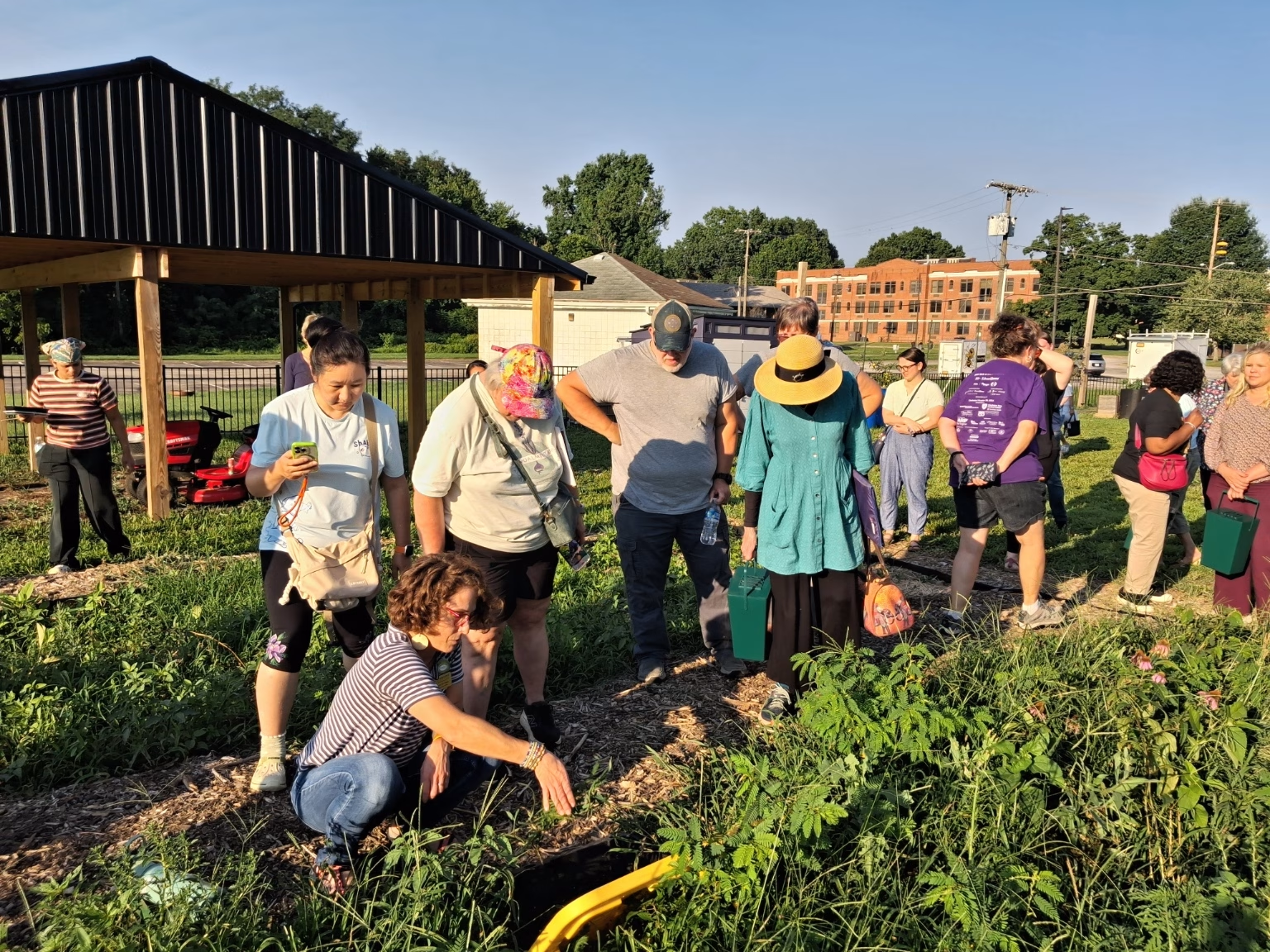
INSTITUTE, W.Va.—West Virginia State University (WVSU) Extension Service has launched a demonstration garden site on the University’s Institute campus, serving as a venue for hands-on agricultural, environmental and garden workshops.
The site is designed to showcase for people the kinds of agricultural endeavors that can be explored in a small space.
“We want to show people what they can do on, perhaps, a quarter acre of land—common-sized spaces that a homeowner might have available to them,” said Natural Resources Extension Specialist Liz Moss.
The demonstration garden will be used for hands-on workshops led by WVSU Extension Service’s agriculture and natural resources staff, with potential to expand to other areas of Extension’s portfolio, including nutrition, health, economic development and 4-H.
“This site is more than just growing food,” added Extension Educator Jorge Vera. “It allows us to demonstrate how working with the land and not against can transform a small yard into a rich habitat for pollinators, native insects, birds and small animals.
Among the workshop topics being considered for the space are pollinator garden establishment, native plant conservation, rainwater collection, composting and growing crops like mushrooms, fruit trees, berries and other vegetables.
According to Vera, highlighting native plants teaches the community how to support wildlife and foster a sustainable habitat right in their backyard. “By promoting native species, we can help with invasive species control, drought and reduce the amount of water we use while improving our soil,” he said.
“Extension programming, by its definition, brings a university’s research-based knowledge to people in their own communities,” Moss said. WVSU Extension Service conducts programs in all 55 West Virginia counties. “While much of our work takes place throughout the state, it is important to remember that the campus community—as well as the greater Kanawha Valley surrounding campus—is also part of our service area.”
Recent workshops on composting have proven successful by incorporating lecture-style instruction with hands-on demonstration showcasing composting methods being done at the garden.
“We wanted to show attendees composting in action—to let them get their hands dirty, so to speak—and to show them that they don’t need a lot of space to do it successfully,” Moss said.
The site features a covered area for meeting and lectures, as well as various raised beds where crops and native plants are grown for instructional purposes. Harvests are routinely taken to WVSU’s Stinger Produce Market, located across Route 25 from the University’s main entrance, as well as distributed to participants in WVSU’s Healthy Grandfamilies program, which provides education and resources to grandparents who are raising their grandchildren.
As fall approaches, staff members are working on permanent signage for the space, as well as developing a roster of workshop topics.
The demonstration garden is located along the campus’ western edge, across from Katherine Johnson Plaza and Parking Lot E on the campus map.
For more information about the demonstration garden site, contact Moss at elizabeth.moss@wvstateu.edu.
This work is supported by the USDA National Institute of Food and Agriculture.
Follow West Virginia State University and WVSU Extension Service on Facebook and X @WVStateU.